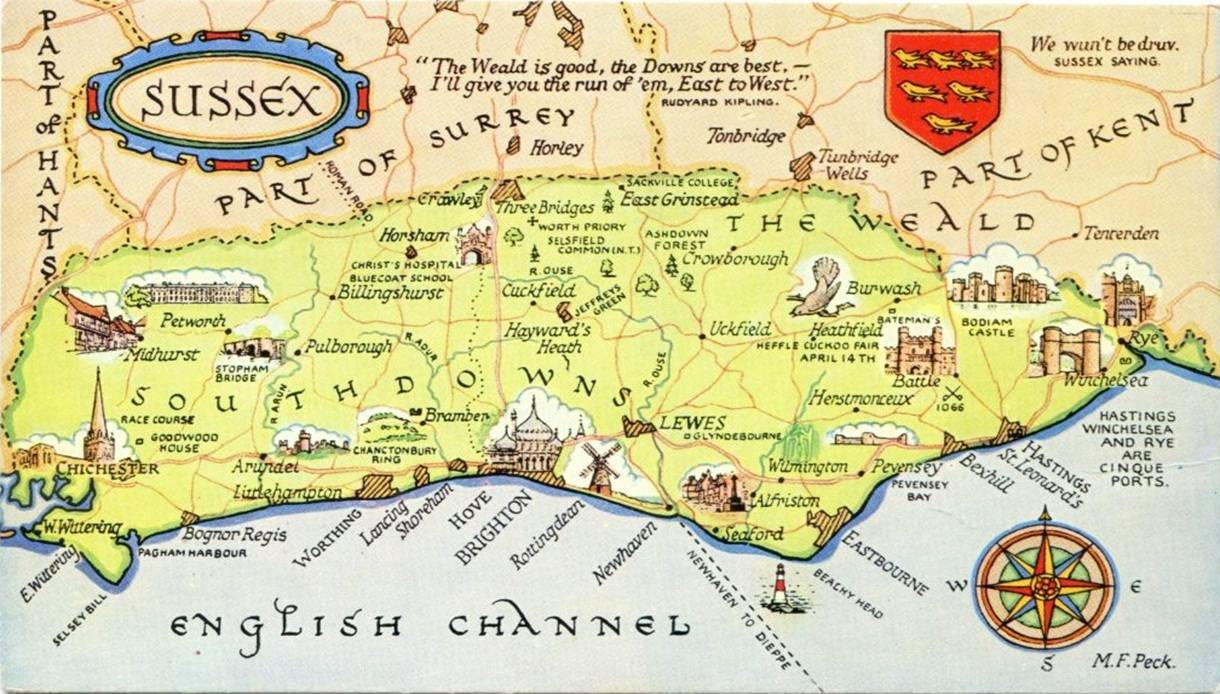

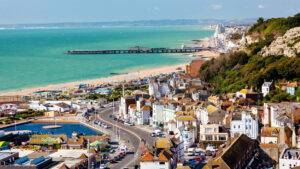
The story of 1066 Country and the Battle of Hastings is woven into the landscape of East Sussex. Rolling hills, ancient woodlands and wide open skies form what people proudly call “1066 Country.” This corner of England is more than a picturesque stretch of coastline and countryside. It also served as the stage for one of the most significant events in British history – the Battle of Hastings.
In the early autumn of 1066, England faced upheaval. King Edward the Confessor had died in January and Harold Godwinson, a powerful English nobleman, claimed the throne. Across the Channel, Duke William of Normandy asserted that the crown had been promised to him. Determined to press his claim, William gathered an army and in late September, sailed for England.
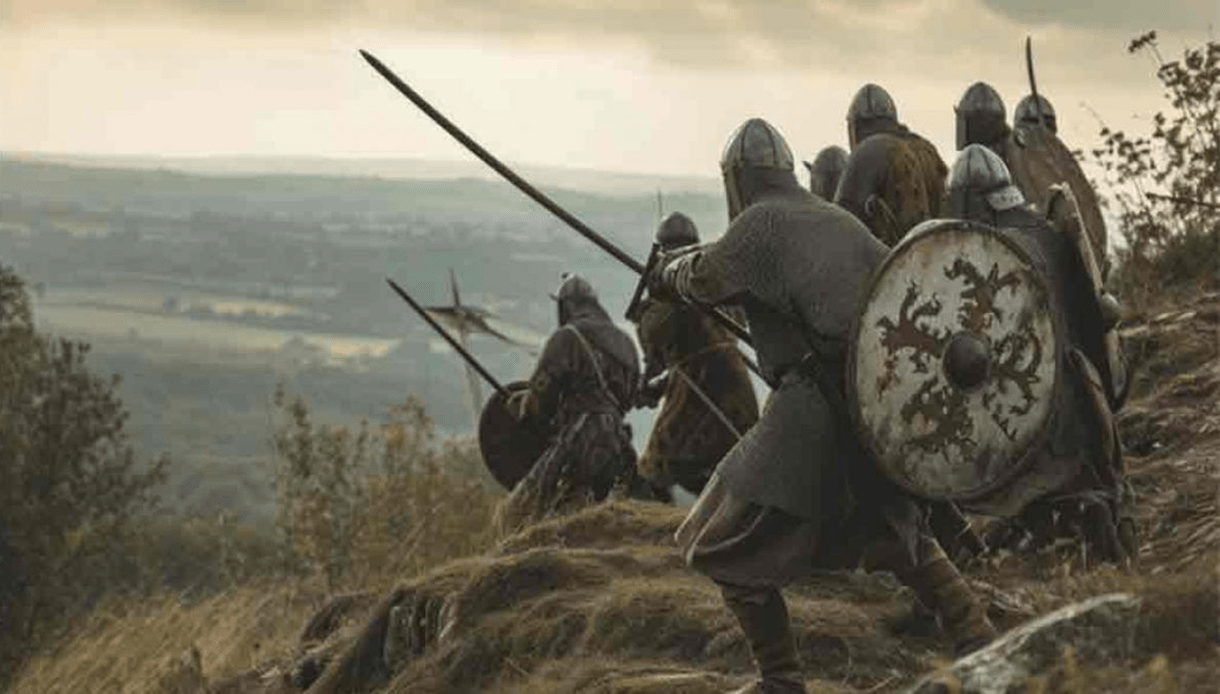
William landed at Pevensey, on what is now the Sussex coast, and then marched inland toward the area called Battle. Harold, having just defeated a Viking invasion in the north, hurried south to meet him. On 14 October 1066, the two armies clashed on Senlac Hill.
The fighting lasted for hours. Harold’s shield wall faced William’s disciplined Norman troops, supported by archers and cavalry. By the end of the day, Harold lay dead – an arrow had struck him in the eye, as famously shown in the Bayeux Tapestry. William now had a clear path to the English throne and soon crowned himself William the Conqueror.
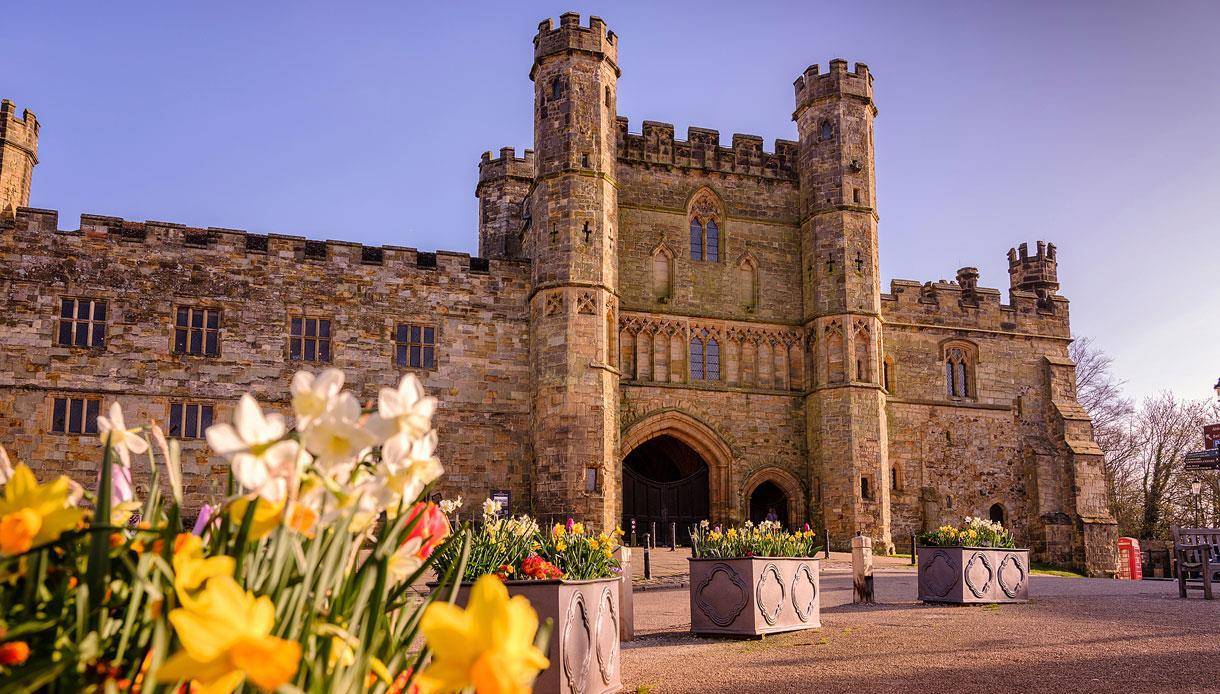
Today, 1066 Country includes Battle, Hastings, Rye, Pevensey and nearby villages. It is a region where history feels tangible. At Battle Abbey, built by William on the site of the conflict, visitors can stand on the ground where England’s fate was decided. The abbey ruins and the visitor centre bring the events of that day vividly to life.
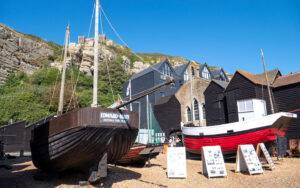
Hastings, though not the battle site, embraces its 1066 history. The town’s Old Town, with its narrow streets and fishing heritage, contrasts with the drama of its medieval past. Above, the ruins of Hastings Castle – built by the Normans soon after the conquest – overlook the sea, reminding visitors how quickly William consolidated his power.
Pevensey Castle, where William first landed, is another powerful link to the past. Originally a Roman fort, it was adapted by the Normans and later played roles in medieval and even Second World War defences. Layers of history like this are typical of 1066 Country, where every era has left its mark.
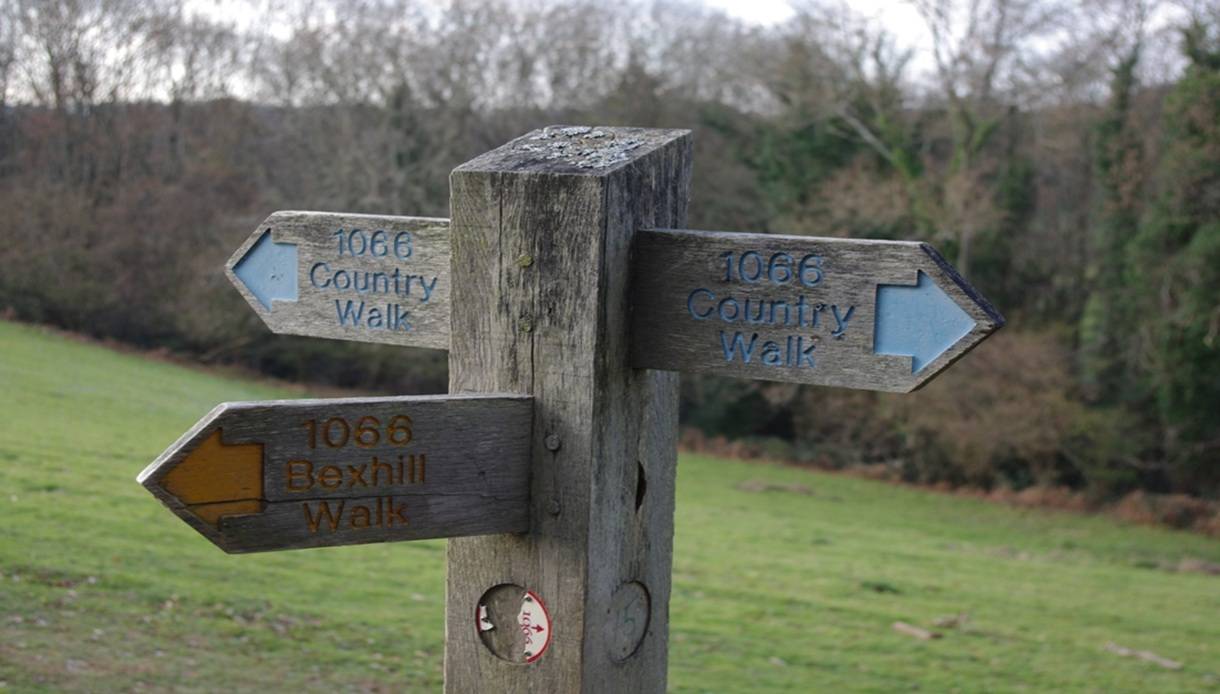
Beyond battlefields and castles, the landscape itself tells a story. Gentle slopes, hedgerows and patchwork fields are much as they were in the eleventh century. Walking trails, such as the 1066 Country Walk, let visitors trace the likely route of William’s march from Pevensey to Battle.
Q: Where exactly did the Battle of Hastings happen?
A: The conflict occurred on a site known as Senlac Hill, where the town of Battle now stands, and where Battle Abbey preserves the historic battlefield today..
Q: Can you visit the battlefield today?
A: Yes! Visitors can explore the abbey grounds and walk the marked trails around the battlefield. Information panels and guides help bring the history to life.
Q: How far is the battlefield from Hastings?
A: It is approximately 6 miles (10 km) north of Hastings – about a 15–20 minute drive or a scenic bike ride.
Q: How long does a visit take?
A: Most visitors spend around 1–2 hours exploring the battlefield, abbey and visitor centre.
Q: Where can I park when visiting the Battlefield in Battle?
A: The main parking for visitors is at Battle Abbey Car Park, located directly next to the abbey. There are also street parking options nearby in the town of Battle
Q: What other historic places are nearby?
A: Nearby sites include:
1066 Battlefield Heritage Centre – Interactive exhibits about the Norman conquest.
Battle Museum of Local History – Local museum with detailed history of the area.
The Almonry Gardens – A tranquil, historic garden situated behind the local history museum.
The events of 1066 reshaped England’s language, governance and culture. This legacy endures today. In 1066 Country, visitors do not just read about it in textbooks – they can see it etched into the land. Exploring this part of East Sussex allows people to step back into a defining chapter of British history, where conquest and change began on a Sussex hillside.
At the Apollo Guest House, you’ll have easy access to all the best that Hastings has to offer, thanks to its prime location. So if you’re looking for comfortable accommodation in the heart of this beautiful coastal town, look no further than the Apollo Guest House.
Sites like Airbnb & Bookings.com charge you a service fee & us a commission.
When you book direct with us, we pass those savings on to you so you get the best rate – guaranteed!